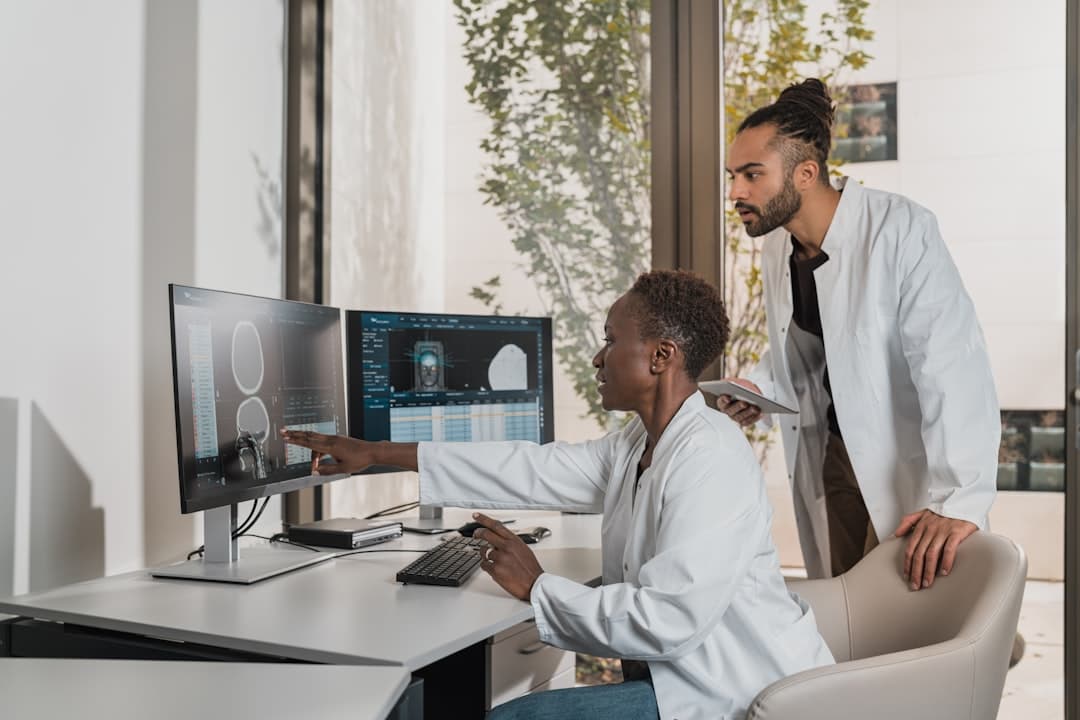
Most hospital analytics looks backwards: what was our occupancy last month, what did we bill last quarter. Useful — but it is hindsight. The next step, and the one that changes how a hospital operates, is foresight: knowing tomorrow's likely OPD load, which patients are at risk of readmission, or which drugs will run short next week. That is predictive analytics — and it is moving from research labs into everyday hospital software. This guide explains what it realistically does for an Indian hospital, and how to start.
(This is the forecasting layer of the analytics cluster; for the foundation, see the hospital data analytics platform guide.)
Descriptive vs Predictive: The Key Shift
It helps to be precise about where predictive analytics sits:
| Type | Question it answers |
|---|---|
| Descriptive (dashboards) | What happened? |
| Diagnostic (BI) | Why did it happen? |
| Predictive | What is likely to happen next? |
Predictive analytics uses past patterns — often with machine learning — to estimate future ones, turning data from a rear-view mirror into a windscreen.
What Hospitals Can Actually Predict
Ignore the hype; these are grounded, valuable uses:
- Demand forecasting — tomorrow's OPD and admission volumes, for staffing and bed planning
- Inventory and drug needs — predicting consumption to prevent stockouts and expiry
- Readmission risk — flagging higher-risk patients for follow-up before they bounce back
- No-show prediction — anticipating missed appointments to manage schedules
- Resource demand — modelling bed, OT, and staff needs ahead of time
Each turns a reaction into a head start.
How to Start (Without Boiling the Ocean)
The mistake is treating predictive analytics as a giant AI project. The reality:
- Pick one high-value use case — demand or inventory forecasting are the usual best first wins.
- Use the data you have — reasonably clean history matters more than volume.
- Prefer built-in features first — many analytics platforms now package forecasting, so you can start without building models.
- Measure the decision it improved — staffing matched to demand, stockouts avoided.
- Expand to further use cases once one proves its value.
This is exactly how predictive forecasting already helps on the pharmacy side — see AI demand forecasting for pharmacies.
Keep It Grounded
Predictive analytics supports decisions; it does not make them, and it is not a crystal ball. Forecasts have uncertainty, and a clinician's or manager's judgement stays central. Used honestly — as a head start, not an oracle — it is one of the highest-leverage capabilities a data-driven hospital can add.
How to Choose
- Built-in, practical forecasting (demand, inventory) to start fast.
- Works on your real, historical data.
- Transparent — you can see what drives a prediction.
- Tied to a decision — staffing, ordering, follow-up.
- On a solid analytics platform, integrated with your hospital system.
Moving from hindsight to foresight is the next step for hospitals already comfortable with dashboards. To see practical forecasting on your data, our healthcare analytics platform includes predictive features — book a demo.
Frequently Asked Questions
Related software
Ready to transform your healthcare business?
See how GoMeds AI can automate your operations, reduce costs, and improve patient outcomes with a personalized demo.
Tags
Written by Rahul Bansal
Published on 1 May 2026