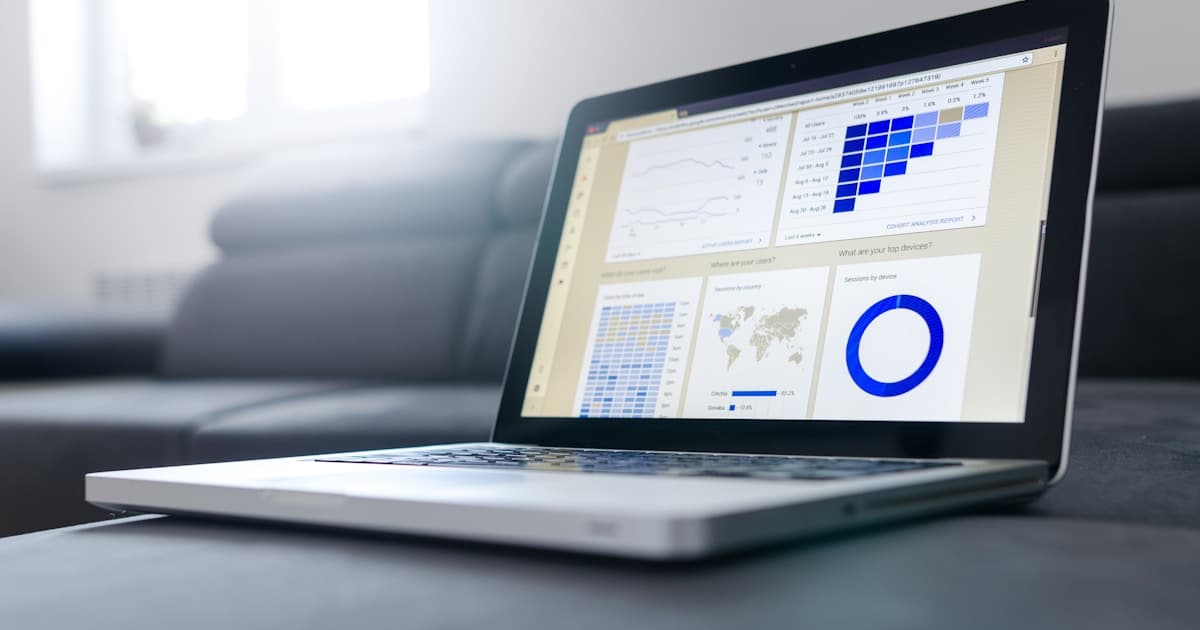
There is a peculiar trap in healthcare analytics: the more a dashboard tries to show, the less it gets used. Faced with sixty charts, a busy medical director sees none of them. A healthcare KPI dashboard does the opposite — it shows the handful of numbers that actually reflect whether the organisation is healthy, live, in one glance. The skill is not in the software so much as in choosing the right KPIs and presenting them so they prompt action. This guide covers both.
(For the foundation these dashboards sit on, see our hospital data analytics platform guide; this post is specifically about KPIs and dashboards.)
What a KPI Dashboard Is For
A KPI dashboard answers one question fast: is the organisation performing, and where is it not? It is a focused, at-a-glance view of the few metrics that matter most, updated live, each ideally measured against a target. Its job is not to hold all the data — it is to surface the signal that should change a decision today.
The KPIs Worth Tracking
The right set depends on the organisation, but these consistently earn their place on a hospital dashboard:
| KPI | Why it matters |
|---|---|
| Bed occupancy rate | Core capacity utilisation |
| Average length of stay (ALOS) | Efficiency and throughput |
| Bed turnover | How fast beds serve new patients |
| OPD / IPD volumes | Demand and trend |
| Average revenue per bed/patient | Financial productivity |
| Claim denial rate | Revenue-cycle health |
| OT utilisation | Theatre efficiency |
| Emergency turnaround time | ED performance and safety |
Clinics and labs have their own equivalents — no-show rate, consultation volume, test turnaround, repeat-test rate. The principle is universal: a few decision-driving metrics, not a wall of charts.
The Discipline: Fewer, Targeted, Live
Three rules separate dashboards that drive action from those that gather dust:
- Fewer metrics. If everything is a KPI, nothing is. Pick the vital few.
- Targets, not just values. "Occupancy 72%" means little; "72% vs 85% target" prompts action.
- Live and trusted. A dashboard fed by stale or doubted data gets abandoned. It must draw from the live hospital information system.
Where Dashboards End and Other Tools Begin
A KPI dashboard tells you what is happening at a glance. When you need to ask why — slicing and drilling into the data yourself — that is business intelligence. When you need to know what will happen next, that is predictive analytics. And the routine, detailed reports for management and statutory needs are MIS reporting. The dashboard is the glance; the others are the deep dives — all on the same platform.
How to Choose
- Configurable KPIs with targets, not a fixed set.
- Live data from your hospital/clinic system.
- Glance-readable for non-technical leaders.
- Role-based views — board, department head, manager.
- A path to deeper analysis when a KPI raises a question.
The best dashboard is the one a leader actually checks every morning. To build a focused, live KPI dashboard on your real data, our healthcare analytics platform makes it straightforward — book a demo.
Frequently Asked Questions
Related software
Ready to transform your healthcare business?
See how GoMeds AI can automate your operations, reduce costs, and improve patient outcomes with a personalized demo.
Tags
Written by Sneha Kapoor
Published on 2 May 2026