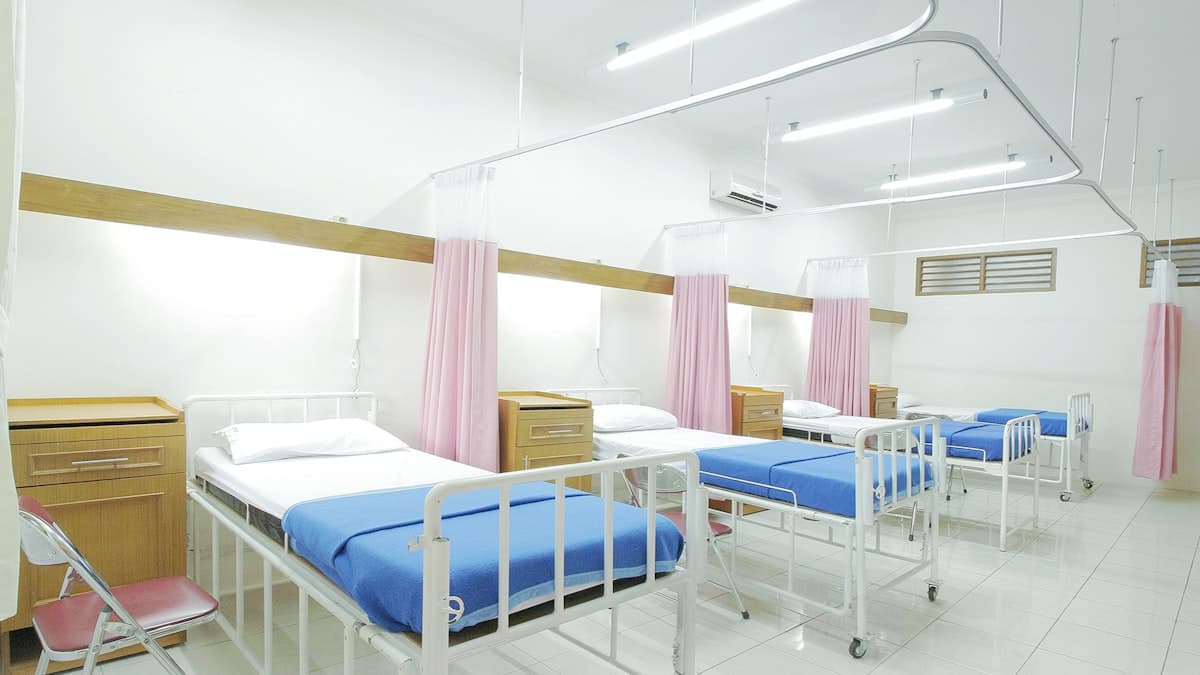
I will never forget the face of the medical superintendent at a 150-bed hospital in Mysuru when the NABH assessor asked for the medication error reports from the last six months.
He turned to his quality coordinator. The quality coordinator turned to the nursing superintendent. The nursing superintendent opened a filing cabinet, pulled out a thick folder, and started flipping pages. After twelve excruciating minutes, they found three incident reports — handwritten, undated, with no root cause analysis documented.
The assessor made a note and moved on. Everyone in the room knew what that note meant.
NABH accreditation is not something you cram for the night before. It requires consistent, documented, auditable processes running across every department, every day. And if those processes live in paper files and registers, you are setting yourself up for exactly the kind of moment I just described.
Why NABH Matters More Now Than Ever
Let me be direct. Five years ago, NABH accreditation was a competitive advantage. Today, for many hospitals, it is becoming a survival requirement.
Insurance panels are thinning. Major insurance companies and Third-Party Administrators (TPAs) increasingly prefer or require NABH-accredited hospitals on their network. Some have started removing non-accredited hospitals from cashless panels. If 30% to 40% of your revenue comes from insurance patients, losing panel empanelment is an existential threat.
Government schemes demand it. Ayushman Bharat and several state health insurance schemes give preference to accredited hospitals. NABH Entry Level certification is becoming a minimum requirement for scheme empanelment in many states.
Patients are checking. Urban patients — especially younger ones — search "NABH hospital near me" on Google before choosing where to get treated. Your accreditation status is visible on the NABH website.
What NABH Actually Requires From Your Software
NABH has 10 chapters and over 600 standards. I am not going to cover all of them — that is what the NABH manual is for. But there are specific areas where your hospital management software either makes compliance effortless or makes it a daily struggle.
Patient Safety and Quality Indicators
NABH requires tracking and reporting on a defined set of quality indicators:
- Hospital-acquired infection rates (surgical site infections, catheter-associated UTIs, ventilator-associated pneumonia)
- Medication error rates and near-miss reports
- Patient falls
- Readmission rates within 30 days
- Unplanned return to ICU
- Average length of stay by department
- Mortality rates by category
Tracking these manually means someone (usually your poor quality coordinator) going through discharge summaries, nursing notes, and incident reports — manually counting, categorising, and calculating rates.
With hospital software that captures this data during normal clinical workflows, the indicators compute automatically. A medication error gets reported through the software when it happens. An infection gets flagged when it is diagnosed. Readmission is detected when the system recognises the patient was discharged less than 30 days ago.
Your quality coordinator goes from spending three days per month compiling data to spending thirty minutes reviewing dashboards.

Document Control
This is the chapter that catches most hospitals off-guard. NABH requires:
- Every policy and procedure document must have a version number, an approval date, and a review date
- Old versions must be archived (not deleted — archived)
- Staff must acknowledge that they have read current versions
- Documents must be reviewed at defined intervals (typically annually)
A hospital with 200 active policy documents — which is not unusual — needs a system to track version history, expiry dates, reviewer assignments, and staff acknowledgements for every single one.
Some hospital management systems include a document management module. Others integrate with dedicated quality management tools. Either way, doing this in a shared drive with Word files is a recipe for the assessor finding documents that were "last reviewed in 2022."
Incident Reporting and Root Cause Analysis
When something goes wrong — a wrong medication administered, a patient fall, a near-miss transfusion error — NABH expects:
- Immediate documentation of the incident
- Classification by severity and type
- Root Cause Analysis (RCA) for serious events using structured methodologies (fishbone diagram, 5-why analysis)
- Corrective and Preventive Actions (CAPA) with assigned owners and deadlines
- Follow-up verification that the CAPA was implemented and effective
This entire workflow needs an audit trail. Who reported it, when, who investigated, what was found, what was done about it.
Software with built-in incident reporting modules gives staff a simple form to report incidents from any terminal. The system automatically assigns the incident to the relevant department head, tracks the RCA process, and follows up on CAPA deadlines. Everything is timestamped and logged.
Consent Management
NABH is very particular about informed consent. For every procedure, the software should support:
- Standardised consent templates that include risks, alternatives, and expected outcomes
- Digital or scanned patient signatures
- Timestamp of when consent was obtained
- Linking consent to the specific procedure in the patient record
- Multilingual consent forms (most hospitals in India need at least two languages)
Staff Credentialing
Every doctor, nurse, and paramedical staff member must have verified credentials on file. The software should track:
- Professional registration numbers (Medical Council registration, Nursing Council registration)
- Renewal dates with automatic alerts
- Privileging documents — which procedures each doctor is authorised to perform
- Training records and CME (Continuing Medical Education) credits
- Background verification status

What "NABH-Ready Software" Actually Means (And What Is Marketing)
Every HMS vendor claims their software is "NABH-ready." Here is how to verify:
Real NABH Readiness
- Quality indicator dashboards are built into the system, not a separate add-on
- Incident reporting is accessible from every department terminal, not just the quality department
- Audit trails are automatic and immutable — no one can delete or modify records without a log
- Document control has version management, review scheduling, and staff acknowledgement tracking
- The system generates NABH-format reports that map directly to assessment requirements
Fake NABH Readiness
- "We can customise reports for NABH" (translation: nothing is built in, you will pay extra)
- Quality indicators require manual data entry into a separate module (defeats the purpose)
- Incident reporting exists but nobody uses it because it is buried in a sub-menu
- Document control means uploading PDFs to a folder (no versioning, no tracking)
My test: Ask the vendor to show you the NABH quality indicator dashboard populated with real data from a reference hospital. If they can show you live dashboards with automatically computed infection rates, medication error trends, and readmission statistics, they are genuine. If they show you empty templates and say "we will configure this for you," proceed with caution.
The Timeline Nobody Talks About
Getting NABH-accredited is not a six-month project. Here is a realistic timeline:
| Phase | Duration | What Happens |
|---|---|---|
| Gap assessment | 1–2 months | Identify what you have vs. what NABH requires |
| Software implementation | 2–4 months | Deploy HMS with quality modules, train staff |
| Process establishment | 3–6 months | Document policies, establish workflows, start indicator tracking |
| Data accumulation | 6–12 months | You need at least six months of quality data for the assessment |
| Pre-assessment | 1 month | Internal audit, mock assessment, gap closure |
| NABH assessment | 1–2 weeks | Assessors visit, review documentation, interview staff |
Total: 12 to 24 months from decision to accreditation for a typical 100+ bed hospital starting from scratch.
The software should be implemented in the first three to four months so that all subsequent data collection happens digitally. If you implement software six months before the assessment and try to retrospectively enter data, the assessors will spot it immediately.
Cost of NABH Compliance (With and Without Software)
| Expense | Without Software | With Software |
|---|---|---|
| Quality coordinator (dedicated) | 1–2 full-time staff | 1 part-time (dashboards do the heavy lifting) |
| Documentation management | 15–20 hours/month manually | 2–3 hours/month |
| Assessment preparation | 3–4 months of intense effort | Ongoing readiness (always prepared) |
| Post-accreditation maintenance | Significant manual effort every cycle | Automated monitoring and alerts |
The software investment (which is part of your HMS cost anyway) pays for itself through reduced quality staffing needs alone.
The Bottom Line
NABH accreditation is not about buying a certificate. It is about building a hospital culture where quality is measured, documented, and improved continuously. Software does not create that culture — leadership does. But software makes the culture sustainable.
Without software, NABH becomes a periodic sprint — three months of frantic documentation before the assessor arrives, followed by two years of gradual decay until the next cycle.
With the right software, NABH compliance is a byproduct of doing your job. Data gets captured as patients are treated. Indicators get computed as events happen. Incidents get tracked as they are reported. When the assessor arrives, you open a dashboard instead of a filing cabinet.
GoMeds AI Hospital Management System is built with NABH compliance woven into every module — quality indicators, incident reporting, document control, consent management, and staff credentialing. If you are starting your NABH journey, talk to our team and we will show you exactly how the software maps to the assessment requirements.
Dr. Ramesh Iyer is a former NABH assessor and hospital quality consultant. He has guided 25+ hospitals across Karnataka, Tamil Nadu, and Kerala through successful NABH accreditation.
Frequently Asked Questions
Ready to transform your healthcare business?
See how GoMeds AI can automate your operations, reduce costs, and improve patient outcomes with a personalized demo.
Tags
Written by Dr. Ramesh Iyer
Published on 16 March 2026