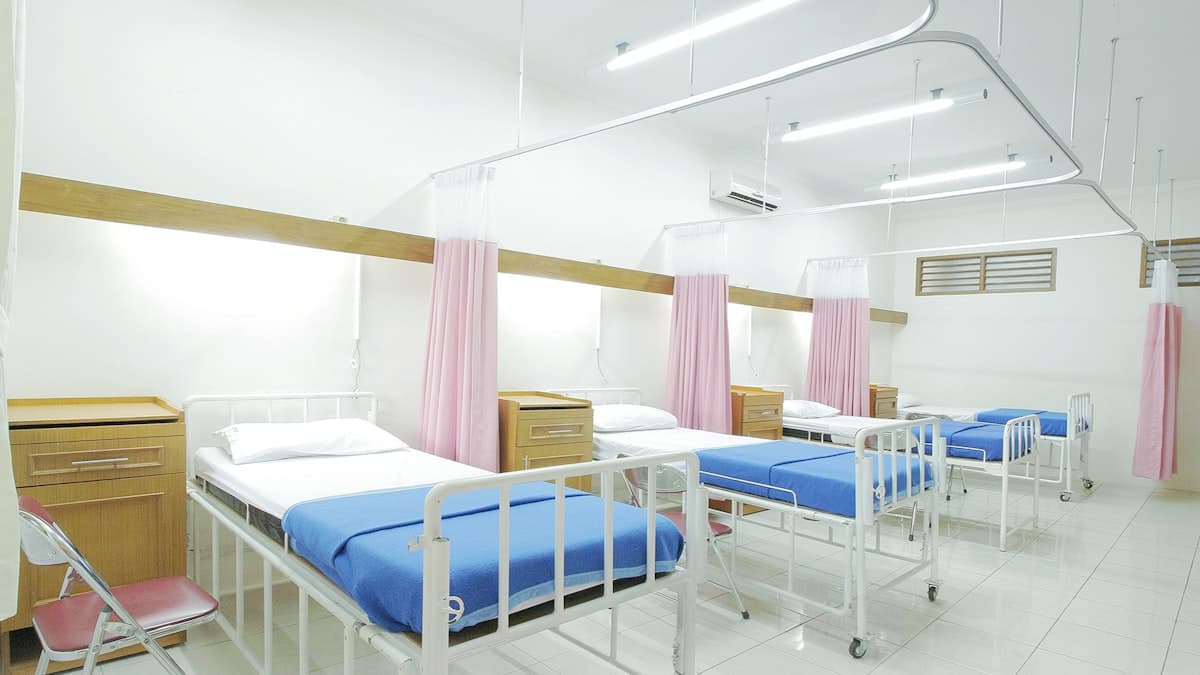
I spent three days at a 150-bed hospital in Nagpur last quarter, observing their billing department. What I saw was painful.
The billing team had seven people. They arrived at 8 AM and often stayed until 9 PM. Despite that, the hospital was writing off Rs 15 to Rs 18 lakh every month in unbilled charges, denied insurance claims, and billing disputes. Every month.
The CFO knew it was happening. "We estimate we lose 8% to 12% of potential revenue to billing problems," he told me. "But fixing it would require us to overhaul our entire system, and we do not have time for that."
Here is the irony: they did not have time to fix the system, but they had time to lose Rs 2 crore a year.
This is not an unusual situation. Across Indian hospitals — from 50-bed nursing homes to 500-bed multi-specialty centres — billing is the single largest source of revenue leakage. Not because the hospital does not provide the services, but because the services do not make it accurately onto the bill.
Where Hospitals Lose Money (The Six Leaks)
Let me map out exactly where billing goes wrong, because the problems are specific and fixable.
Leak 1: Unbilled Services
A nurse administers an injection at 2 AM in the ICU. The procedure is documented in the nursing notes but never makes it to the billing system. Nobody notices until the patient is discharged and the family has already settled the bill.
This is the most common revenue leak in Indian hospitals. Studies suggest that 3% to 7% of hospital services go unbilled — missed medications, unreported consumables, procedures documented in clinical notes but not in billing.
The fix is not "tell the nurses to be more careful." The fix is a system where clinical documentation automatically triggers billing entries. When a nurse records an injection in the patient chart, the corresponding charge should appear in the billing queue. No manual re-entry, no relying on someone remembering to send a slip to the billing counter.
Leak 2: Insurance Claim Denials
If your hospital does cashless insurance billing, you know this pain intimately. The TPA denies a claim. The reasons range from legitimate ("procedure not covered under this policy") to maddening ("patient name mismatch — first name and last name swapped in your submission").
Indian hospitals see claim denial rates of 15% to 25% on first submission. Each denied claim requires investigation, correction, and resubmission. Some are resubmitted two or three times. Some are eventually written off because the cost of pursuing them exceeds the claim value.
Good billing software reduces denials by catching errors before submission — name mismatches, missing documents, procedure codes that do not match the diagnosis, policy coverage verification done at admission rather than at discharge.
Leak 3: Package Rate Miscalculation
Many hospitals offer package rates for common procedures — Rs 1,20,000 for a knee replacement, Rs 35,000 for a normal delivery. The package includes a defined set of services. The problem arises when the actual services provided exceed the package.
A patient admitted under a normal delivery package develops a complication and requires additional medication, an extra day in the ICU, and specialist consultation. If the billing system does not flag when the package ceiling is breached, the hospital absorbs the cost difference. And nobody realises it happened until the monthly P&L review.
Leak 4: Pharmacy and Consumable Charges
In-patient pharmacy charges are a particular headache. Medicines are issued from the hospital pharmacy to the ward. They should be billed to the patient. But the chain has multiple handoff points — the doctor orders, the pharmacy dispenses, the nurse administers — and at any of these points the billing entry can fall through.
Surgical consumables are even worse. A surgeon uses three suture packets instead of two during a procedure. The extra packet cost is Rs 800. Nobody updates the billing because the surgeon is in the OT, the OT nurse sends a consumption slip that sits on someone's desk until the next morning, and by then the patient has been billed and discharged.

Leak 5: Delayed Billing at Discharge
The discharge process at most Indian hospitals follows a frustrating pattern:
- Doctor writes discharge summary (takes 1 to 4 hours after the decision to discharge)
- Billing team compiles the final bill (takes 1 to 3 hours)
- Insurance team submits the claim (takes 1 to 2 hours for cashless cases)
- Patient waits, frustrated, sometimes for half a day
During this wait, the patient's family is upset. They negotiate. They dispute charges. They threaten to post a bad review. The hospital, wanting to clear the bed and avoid conflict, gives discounts that were not necessary.
Fast billing — where the bill is ready within 30 minutes of the discharge decision — eliminates this pressure. The bill is accurate, comprehensive, and presented before frustration builds.
Leak 6: Duplicate and Incorrect Charges
This one hurts the hospital's reputation more than its finances. A patient is billed for a blood test that was ordered but cancelled. Or billed twice for the same consultation because two different departments entered it. Or charged for a single room when they were in a shared ward.
Patients catch these errors. When they do, they lose trust — not just in the billing department but in the hospital's clinical accuracy too. "If they cannot get my bill right, are they getting my treatment right?"
What Hospital Billing Software Should Actually Do
Not all billing software is created equal. Some are glorified calculators. Others are comprehensive revenue cycle management platforms. Here is what matters.
Real-Time Charge Capture
Every service, every medicine, every consumable should be captured at the point of delivery. When a nurse administers a drug, it is billed. When a lab runs a test, it is billed. When a surgeon opens a consumable pack, it is billed.
This requires integration between clinical systems (nursing stations, pharmacy, laboratory, OT) and the billing system. If billing is a separate island that receives data through manual slips and end-of-day entries, you will always have leakage.
Insurance Pre-Authorization and Eligibility
At the point of admission, the system should verify:
- Is the patient's insurance active?
- Is the planned procedure covered?
- What is the sum insured and how much has been utilised?
- Does the procedure require pre-authorization?
- Which TPA handles this policy, and what are their specific documentation requirements?
Catching coverage issues at admission — not at discharge — prevents the single most frustrating scenario in hospital billing: a patient who assumed they were covered, received treatment, and then discovers at discharge that the claim is denied.
Multi-Tariff Management
Indian hospitals typically maintain multiple rate cards:
- General tariff for cash-paying patients
- CGHS rates for Central Government Health Scheme beneficiaries
- State government rates (ESI, RGHS, etc.)
- Insurance panel rates (different for each TPA and each insurance company)
- Package rates for specific procedures
- Referral discounts for patients referred by empanelled doctors
Your billing software must handle all of these simultaneously. When a patient is admitted under a specific insurance plan, the system should automatically apply the correct tariff — not the general rate that needs to be manually adjusted later.
GST Compliance for Healthcare
Healthcare GST in India is nuanced:
- Room charges above Rs 5,000 per day attract 5% GST (without ITC)
- Diagnostic services (non-clinical) may attract GST
- Pharmacy sales within the hospital attract standard medicine GST rates
- Doctor consultation fees for in-patients may be exempt
- Bundled healthcare services have different treatment than unbundled
Your billing software must apply the correct GST treatment to each line item automatically. Getting this wrong results in either overcharging patients (legal risk) or under-reporting tax (compliance risk).

Discharge Billing Workflow
The ideal discharge billing workflow:
- Doctor initiates discharge in the system
- System auto-compiles all charges — room, pharmacy, lab, procedures, consultations, consumables
- Billing team reviews the compiled bill (10 to 15 minutes, not 2 hours)
- For insurance patients: Pre-filled claim form auto-generated with all required documents attached
- For cash patients: Final bill presented within 30 minutes of discharge decision
- Payment processed — UPI, card, cash, or insurance settlement
The key is that billing should not start at discharge. It should be running continuously throughout the admission. At discharge, you are just closing the bill, not building it from scratch.
The Insurance Claim Lifecycle
For hospitals that do significant cashless business, insurance claim management is where software makes or breaks your revenue cycle.
Pre-Authorization
Before or at admission, the system submits pre-auth to the TPA:
- Patient details and policy number
- Planned procedure and ICD codes
- Estimated cost based on the applicable tariff
- Supporting documents (referral letter, diagnostic reports)
The system should track pre-auth status: submitted, approved, partially approved (with the approved amount clearly stated), or rejected.
Interim Claims
For long-stay patients, interim claims are essential. If a patient is in the ICU for 15 days, you cannot wait until discharge to submit the claim. The system should auto-generate interim claims at defined intervals (every 3 to 5 days) to maintain cash flow.
Final Claim and Settlement
At discharge, the final claim includes all charges, deducts the pre-authorized amount or interim payments, and submits the balance. The system should:
- Auto-attach all required documents (discharge summary, investigation reports, pharmacy bills)
- Validate the claim against the TPA's specific requirements before submission
- Track the claim through adjudication — submitted, under review, query raised, settled, or denied
- For denials: flag the reason, maintain an appeal workflow, and track resubmission
GoMeds AI Hospital Management System includes end-to-end insurance claim management — from eligibility verification at admission to settlement tracking and denial analytics.
The Revenue Impact: Real Numbers
I have worked with 20+ hospitals on billing system implementations. Here is what the data consistently shows:
| Metric | Before Software | After Implementation (6 months) |
|---|---|---|
| Revenue leakage (unbilled services) | 5–8% of revenue | 1–2% of revenue |
| Insurance claim denial rate | 18–25% | 8–12% |
| Average time from discharge decision to bill | 3–5 hours | 30–60 minutes |
| Monthly billing disputes from patients | 40–60 | 10–15 |
| Staff hours spent on billing reconciliation | 120+ hours/month | 30–40 hours/month |
For a hospital doing Rs 3 crore in monthly revenue, reducing leakage from 7% to 2% is Rs 15 lakh per month recovered. That is Rs 1.8 crore per year. The billing software pays for itself in the first quarter.
Choosing the Right System: The Questions That Matter
1. Does it integrate with clinical workflows?
If billing is a standalone module disconnected from nursing stations, the pharmacy, and the lab, you will still have manual data entry — and therefore leakage. Integration is not optional; it is the entire point.
2. How does it handle insurance?
Ask for a live demo of the insurance workflow — not a slide deck. Show me pre-auth submission. Show me claim tracking. Show me what happens when a TPA raises a query. If the vendor cannot demo these, their insurance module is not production-ready.
3. Can it manage multiple tariffs simultaneously?
Ask the vendor to set up three different rate cards and bill the same patient under each one. If this requires manual intervention each time, the system is not built for Indian hospital realities.
4. What reports does the CFO get?
Your CFO needs:
- Daily revenue collection report (cash, card, UPI, insurance)
- Outstanding claims ageing report (how long claims have been pending, by TPA)
- Revenue leakage report (unbilled services flagged by the system)
- Department-wise revenue contribution
- Package profitability analysis (are your packages actually making money?)
If the software cannot generate these without custom development, it is not a hospital billing system — it is a billing calculator.
5. What is the implementation timeline?
Be realistic. A full billing system implementation at a 100+ bed hospital takes 8 to 16 weeks, including data migration, staff training, and parallel running. Any vendor promising "go-live in two weeks" for a hospital is either oversimplifying or setting you up for a painful experience.
The Bottom Line
Hospital billing is not a back-office function. It is the mechanism that converts clinical work into revenue. Every unbilled injection, every denied claim, every billing dispute at discharge is money your hospital earned but never collected.
The right billing software does not just generate bills faster. It captures charges in real time, prevents insurance denials before they happen, and gives your finance team the visibility they need to stop revenue from leaking through the cracks.
If your billing team is working 12-hour days and your hospital is still writing off lakhs every month in billing losses, the problem is not your team's effort. It is the system they are working with.
GoMeds AI Hospital Management System includes comprehensive billing — charge capture, multi-tariff management, insurance claims, GST compliance, and real-time revenue analytics — integrated with every clinical department. Book a demo and bring your CFO.
Anand Raghavan is a healthcare finance consultant who has implemented billing systems at 20+ hospitals across Maharashtra, Karnataka, and Tamil Nadu. He specialises in revenue cycle optimisation for mid-sized hospitals.
Frequently Asked Questions
Related software
Ready to transform your healthcare business?
See how GoMeds AI can automate your operations, reduce costs, and improve patient outcomes with a personalized demo.
Tags
Written by Anand Raghavan
Published on 6 April 2026