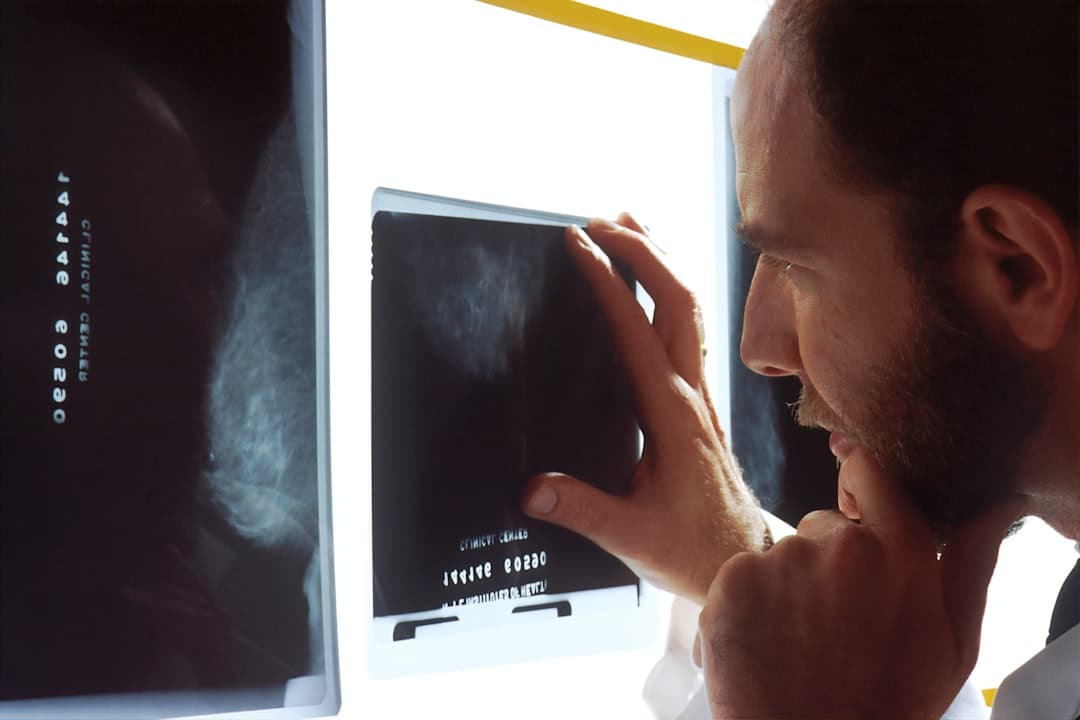
India does not have enough radiologists. That is not a controversial statement — it is arithmetic. The volume of imaging done every day in the country's hospitals and diagnostic centres far outstrips the number of specialists available to report it. The result is backlogs, delayed reports, and radiologists working through exhausting volumes.
This is exactly the gap where AI in radiology earns its place. Not as a replacement for the specialist, but as a way to help too few of them do more, safely.
The Three Jobs AI Does Well in Imaging
1. Triage. The single most valuable thing AI does in a busy imaging department is reorder the queue. Instead of studies being read first-in-first-out, AI can flag a study that looks urgent — a suspected bleed, a pneumothorax — and push it to the top so it is seen in minutes. That prioritisation alone can change outcomes.
2. Second read. A tireless model reviewing every study can flag the subtle finding a human eye misses at the end of a long list. As a safety net behind the radiologist, it catches misses without slowing anyone down.
3. Reporting support. AI can pre-populate measurements and structured findings, so the radiologist spends less time on mechanical documentation and more on interpretation.
Where It Shines in the Indian Context
Screening programmes are the standout. For tuberculosis screening on chest X-rays, or diabetic retinopathy on retinal images, AI lets a small number of specialists oversee screening at a scale that would otherwise be impossible. The AI does the first pass across huge volumes; the specialist focuses on the flagged cases.
For a diagnostic centre, the benefit is throughput and turnaround. Faster triage and reporting support mean reports go out sooner, which is both better care and a competitive advantage.
The Limits You Must Respect
- It is task-specific. A model trained to detect one thing knows nothing about the rest of the image. A "normal" from the AI means normal for that one task, not a clean study.
- It is sensitive to image quality and equipment. Performance validated on one scanner may not hold on an older machine. Validate on your own setup.
- It does not know the patient. The AI has the image, not the history. Correlation with the clinical picture is the radiologist's job.
- It can be confidently wrong on unusual cases. Rare presentations outside the training data are exactly where over-reliance is dangerous.
The safe model is unchanged from the rest of medicine: the AI flags and prioritises, the radiologist interprets and signs. Responsibility does not move to the algorithm.
Making It Work in Your Centre
AI imaging fails when it lives in a separate portal nobody opens. It works when the flags and priorities land inside the reporting workflow and the centre's diagnostic lab software, attached to the right study, so the radiologist sees them without changing how they work.
When you evaluate a tool, ask what it is validated to detect, on whose data, how it integrates with your reporting, and what its false-positive rate does to your radiologists' workload. A tool that cries wolf constantly will be switched off within a month.
The Bottom Line
AI in radiology is one of the clearest wins for AI in Indian healthcare — because the problem it solves, too few specialists for too many scans, is so acute. Used as a triage-and-second-read layer under an accountable radiologist, it clears backlogs, catches misses, and speeds up reports.
To see how imaging and diagnostic reports flow into a unified patient record and reach clinicians in workflow, explore the GoMeds diagnostic lab software or request a demo.
Frequently Asked Questions
Related software
Ready to transform your healthcare business?
See how GoMeds AI can automate your operations, reduce costs, and improve patient outcomes with a personalized demo.
Tags
Written by Dr. Nandini Krishnamurthy
Published on 27 May 2026