

Why Pharmaceutical Warehousing Demands Specialized Software
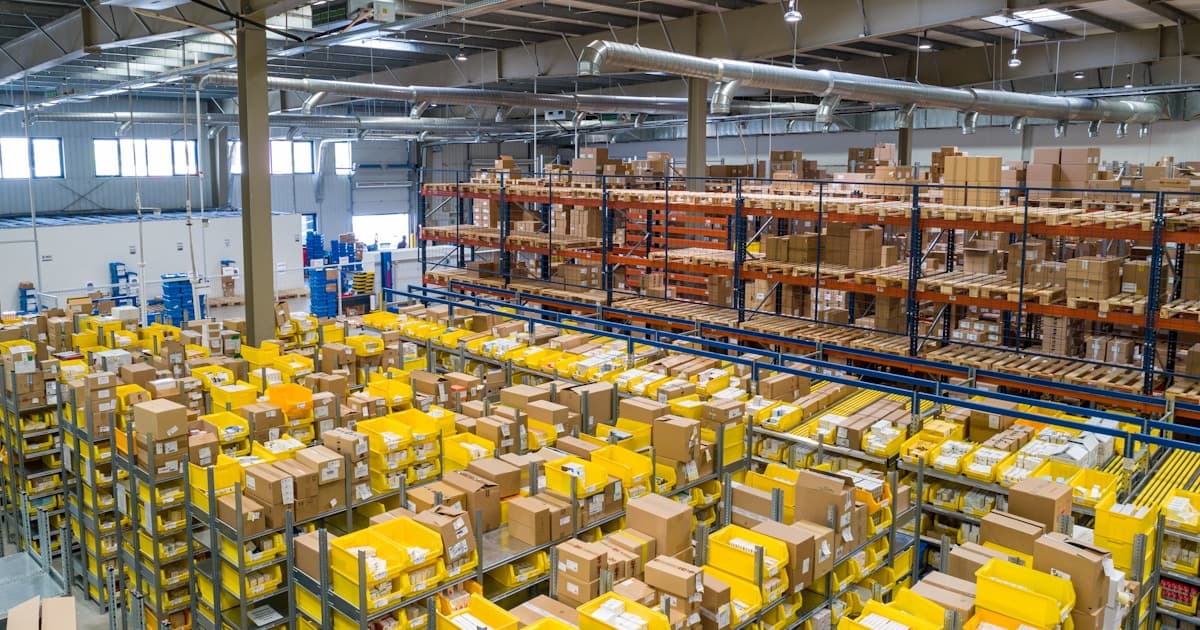
Pharmaceutical warehousing is not general warehousing with medicines. It is a highly regulated, quality-critical operation where a single error in storage, handling, or dispatch can render life-saving medications ineffective, trigger regulatory action, or cause patient harm. The pharmaceutical warehouse operates at the intersection of supply chain efficiency and healthcare quality -- demanding both operational speed and uncompromising compliance.
India's pharmaceutical distribution landscape includes over 60,000 licensed wholesalers and distributors operating warehouses ranging from 500-square-foot godowns in small towns to 50,000-square-foot distribution centres operated by major companies in logistics hubs across Mumbai, Delhi, Hyderabad, Ahmedabad, and Chennai. Regardless of size, every pharmaceutical warehouse must comply with Schedule M storage conditions, maintain drug license requirements, ensure product traceability, and manage the unique challenge of batch-and-expiry-based inventory.
Generic warehouse management systems designed for FMCG or e-commerce fail in pharmaceutical contexts because they lack the regulatory compliance features, batch tracking granularity, temperature zone management, and recall readiness that pharma demands.
GoMeds AI Pharma Distribution Software includes purpose-built warehouse management capabilities designed for the operational realities of Indian pharmaceutical distribution.
Core Functions of a Pharma Warehouse Management System
1. Goods Receipt and Inward Management
Receiving pharmaceutical products requires verification beyond simple quantity checking:
- Purchase order matching: Automatic matching of received goods against purchase orders with variance flagging
- Batch capture: Recording batch number, manufacturing date, expiry date, and MRP for every product received
- Quality inspection: Quarantine area management for products pending quality verification
- Document verification: Checking supplier invoices, test certificates, and transport documentation
- Temperature verification: Recording product temperature at receipt for cold chain items
- Barcode and label verification: Scanning barcodes to verify product identity and ensuring labels meet regulatory requirements
- FEFO slot assignment: Automatic storage location assignment based on First Expiry First Out principles
2. Storage and Location Management
Pharmaceutical storage requires precise zone and location control:
- Zone-based storage: Configuring warehouse zones by temperature requirement (ambient, cool, cold, frozen), product category (general medicines, controlled substances, flammables), and access restriction
- Bin location management: Hierarchical location structure (warehouse, zone, aisle, rack, shelf, bin) with barcode identification
- Put-away optimization: Software-directed put-away routing phlebotomists to optimal storage locations based on product characteristics, zone requirements, and picking efficiency
- Capacity monitoring: Real-time visibility of space utilization by zone, triggering alerts when zones approach capacity
- Segregation requirements: Enforcing physical segregation of returned goods, rejected products, recalled items, expired stock, and controlled substances
3. Inventory Management
Pharma inventory management operates at the batch level:
- Batch-level tracking: Every inventory transaction (receipt, movement, pick, dispatch, return) recorded at the batch level
- Expiry management: Automated FEFO enforcement ensuring products closest to expiry are dispatched first
- Near-expiry alerts: Configurable alerts (90 days, 60 days, 30 days before expiry) triggering markdown, return, or disposal workflows
- Cycle counting: Scheduled and random cycle counts with variance reporting and adjustment workflows
- Stock-take support: Full physical inventory procedures with count capture, reconciliation, and adjustment approval
- ABC analysis: Automatic classification of products by value and movement velocity for differentiated management
For comprehensive inventory capabilities, explore GoMeds AI Healthcare Inventory Software.
4. Order Processing and Picking
Converting customer orders into accurate shipments requires precision:
- Wave planning: Grouping orders into waves based on delivery route, priority, and vehicle capacity
- Pick list generation: Optimized pick lists organized by warehouse walk-path to minimize picker travel
- Batch allocation: Automatic batch selection following FEFO rules with manual override capability
- Pick confirmation: Barcode scanning at pick to verify correct product, batch, and quantity
- Partial fulfillment: Managing orders where not all items are available, with back-order tracking
- Packing verification: Final verification at packing station with weight check and barcode scan confirmation
5. Dispatch and Shipping
Pharmaceutical dispatch requires documentation beyond delivery notes:
- Delivery route optimization: Grouping dispatches by route for efficient vehicle loading
- Vehicle loading sequence: Reverse-delivery-order loading so first-stop deliveries are loaded last
- Invoice generation: Automatic invoice creation with batch details, GST compliance, and e-invoicing IRN
- Temperature documentation: Cold chain transfer documentation for temperature-sensitive shipments
- Proof of delivery: Digital delivery confirmation with recipient signature capture
- GPS tracking: Vehicle tracking from warehouse to delivery points for estimated arrival communication
6. Returns Management
Pharmaceutical returns are complex and regulatory-sensitive:
- Return authorization: Structured return request process with reason categorization (expiry, damage, recall, overstock)
- Return receipt inspection: Quality check of returned products to determine disposition (restock, destroy, return to manufacturer)
- Quarantine management: Returned products held in quarantine until disposition decision
- Credit note generation: Automatic credit note creation linked to original invoice
- Manufacturer claim tracking: Managing claims against manufacturers for expired or defective products returned by retailers
Compliance and Regulatory Features
Schedule M Compliance
Software enforces Schedule M warehousing requirements:
- Temperature and humidity monitoring with automated logging
- Pest control activity scheduling and documentation
- Cleaning and sanitation records
- Personnel access logs for restricted areas
- Product segregation verification
Drug License Requirements
- License tracking: Monitoring drug license validity, renewal dates, and scope for the warehouse and all served retailers
- Product-license verification: Ensuring products dispatched match the receiving retailer's drug license category
- Controlled substance register: Maintaining the narcotic drugs and psychotropic substances register with statutory reporting
Recall Readiness
- Batch traceability: Complete forward and backward traceability for any batch within seconds
- Recall execution: When a recall is initiated, software identifies all locations holding the affected batch, generates pull lists, and tracks recall completion percentage
- Customer notification: Automatic notification to all recipients of affected batches
- Quarantine enforcement: System blocks dispatch of recalled batches even if physically present in pickable locations
Read our pharma distribution software guide for comprehensive distribution management insights.
Warehouse Automation Integration
Barcode and Mobile Scanning
The most common and cost-effective automation for Indian pharma warehouses:
- Handheld barcode scanners for goods receipt, put-away, picking, and dispatch
- Mobile apps on Android devices with built-in cameras as scanner alternatives
- Barcode label printing for location identification and product tracking
- QR code integration for batch-level and invoice-level tracking
Automated Storage and Retrieval
Larger pharmaceutical warehouses are beginning to adopt:
- Vertical carousels for high-density storage of fast-moving products
- Automated conveyor systems for order consolidation
- Pick-to-light systems for high-volume picking operations
- Voice-directed picking for hands-free, eyes-free operation
Analytics and Performance Monitoring
Warehouse performance metrics drive continuous improvement:
| Metric | Target | Impact |
|---|---|---|
| Order accuracy rate | Above 99.5% | Reduces returns and customer complaints |
| Pick rate (lines per hour) | 40-60 for manual picking | Labour productivity |
| On-time dispatch | Above 95% | Customer satisfaction |
| Inventory accuracy | Above 99% | Stock reliability |
| Space utilization | 75-85% | Infrastructure ROI |
| FEFO compliance | 100% | Expiry waste reduction |
| Order cycle time | Under 4 hours | Service responsiveness |
Implementation Guide
Phase One: Foundation (Weeks 1-4)
- Warehouse layout mapping with zone and location configuration
- Product master setup with storage requirements and batch parameters
- Goods receipt and put-away workflows
- Basic inventory management with cycle counting
Phase Two: Operations (Weeks 5-8)
- Order processing and picking optimization
- Dispatch and shipping workflow
- Barcode scanning deployment across all processes
- Returns management workflow
Phase Three: Optimization (Weeks 9-12)
- Analytics dashboards and performance reporting
- FEFO compliance monitoring and enforcement
- Integration with distribution ERP and e-invoicing
- Advanced features like wave planning and route optimization
Learn more about supply chain best practices in our guide on healthcare supply chain management.
Cost Considerations
| Warehouse Size | Monthly Software | One-Time Hardware | Implementation |
|---|---|---|---|
| Small (under 5,000 sq ft) | INR 8,000 - 15,000 | INR 1-3 lakh | INR 50,000 - 1,50,000 |
| Medium (5,000-20,000 sq ft) | INR 15,000 - 35,000 | INR 3-8 lakh | INR 1.5-4 lakh |
| Large (20,000+ sq ft) | INR 35,000 - 80,000 | INR 8-20 lakh | INR 4-10 lakh |
Hardware costs include barcode scanners, label printers, mobile devices, and wireless networking infrastructure.
Ready to transform your healthcare business?
See how GoMeds AI can automate your operations, reduce costs, and improve patient outcomes with a personalized demo.
Tags
Written by GoMeds AI Team
Published on 18 March 2026