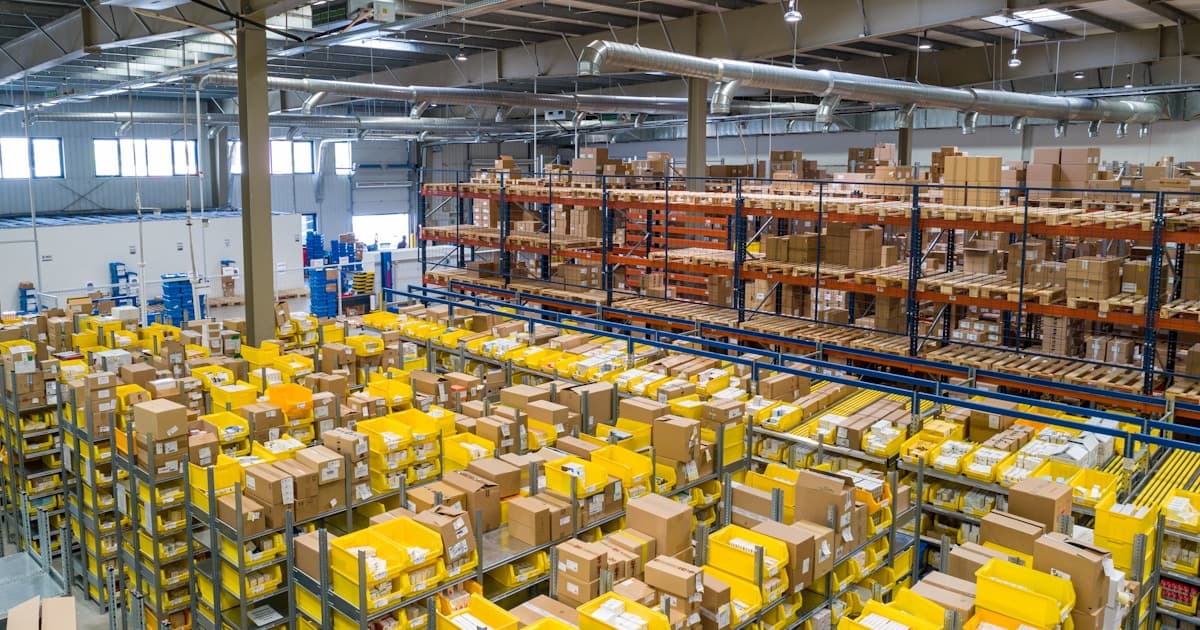
My father started our pharmaceutical distribution business in Ahmedabad in 1996. He ran it with a landline phone, a thick ledger, and thirty years of relationships with pharmacies across Gujarat. When I joined the business in 2015, we were doing Rs 8 crore in annual revenue. Same landline. Same ledger. Same relationships.
The ledger worked until it did not. The moment we crossed 500 active retailers and started handling 800+ invoices per month, the cracks appeared. A missed delivery to a pharmacy in Rajkot — they switched to another distributor and we lost Rs 4 lakh in annual business. A cold chain failure on a batch of insulin — Rs 2.3 lakh written off. A retailer who owed us Rs 1.8 lakh that we did not catch for six months because the outstanding balance was buried in a register.
That is when I started looking at pharma distribution software. And what I learned over the next two years of evaluating and implementing might save you the same headaches.
What Distribution Software Actually Needs to Do
Pharma distribution is fundamentally different from pharma retail. A pharmacy has one location and serves walk-in customers. A distributor operates across a geography, serves hundreds of retailers, manages a fleet, handles cold chain, and navigates regulations that most software vendors do not understand.
The software needs to handle four core workflows:
1. Order Management — Speed and Accuracy
Your retailers order via phone calls, WhatsApp messages, and in-person salesman visits. Sometimes the same retailer places three orders in a day. Sometimes a salesman promises stock you do not have.
Good distribution software centralises all orders:
- Retailer calls your office → order entered into the system instantly
- Salesman in the field → enters the order on a mobile app
- Regular retailers → can place orders directly through a portal
- System checks inventory in real time — no promising stock you do not have
- Duplicate orders flagged automatically
The speed improvement is significant. We went from processing 150 orders a day with four people to 250 orders with three people. Not because the software is magic — because it eliminated the time spent cross-checking handwritten orders against stock registers.
2. Delivery and Route Planning
This is where most money is wasted in pharma distribution. Your delivery vehicles visit 30 to 50 retailers per day across a city. Without optimisation, drivers follow familiar routes, not efficient ones.
Software with route planning:
- Groups deliveries by geography and sequence
- Accounts for delivery time windows (some pharmacies only accept deliveries before noon)
- Tracks actual delivery versus planned delivery
- Records proof of delivery (signature or photo)
- Monitors cold chain temperature for sensitive shipments
We reduced our fuel costs by about 18% in the first year simply by switching from driver-chosen routes to software-optimised routes. That was Rs 3.2 lakh in savings on a Rs 18 lakh annual fuel bill.

3. Retailer Credit Management
This is the silent killer of pharma distribution businesses. You extend credit to retailers — 15 days, 30 days, sometimes 45 days. Managing credit limits and collections across 500+ retailers manually is how money disappears.
The software should:
- Set credit limits per retailer based on their payment history
- Block orders when a retailer exceeds their limit
- Send automated payment reminders at defined intervals
- Generate ageing reports — who owes how much and for how long
- Track cheque deposits and reconcile payments
I discovered we had Rs 28 lakh in outstanding receivables over 90 days that nobody was actively chasing. The software made it visible. We recovered Rs 19 lakh within three months simply by following up systematically.
4. Compliance and Documentation
Pharma distribution in India requires meticulous documentation:
- Drug Licence validation — you cannot sell to a retailer whose licence has expired. The software should track licence expiry dates and block sales automatically.
- E-way bills — for inter-state or high-value shipments, e-way bill generation must be integrated.
- Batch tracking — every batch you receive and distribute must be traceable end-to-end. In case of a recall, you need to know which retailers received which batches within hours, not days.
- GST compliance — B2B invoicing with proper GSTIN, HSN codes, and tax calculations.
The Cold Chain Question
If you distribute temperature-sensitive products — insulin, vaccines, certain biologics, or specific eye drops — cold chain management is not optional.
What the software needs:
- Temperature logging — integration with IoT sensors in your cold storage and delivery vehicles
- Excursion alerts — immediate notification if temperature goes outside the defined range
- Compliance reports — printable temperature logs for each batch showing the chain of custody from receipt to delivery
What most distribution software offers: a checkbox that says "cold chain product." That is not cold chain management. That is a label.
If cold chain is a significant part of your business (and it is growing — biologics and speciality medicines are the fastest-growing pharma segments in India), evaluate this feature very carefully. Ask to see real temperature monitoring dashboards from a reference customer.

What It Costs (Real Numbers, Not Sales Quotes)
| Business Size | Implementation | Monthly Cost | Notes |
|---|---|---|---|
| Small (1 warehouse, 100–200 retailers) | Rs 2–5 lakh | Rs 10,000–25,000 | Basic order + delivery + billing |
| Medium (2–3 warehouses, 500+ retailers) | Rs 5–15 lakh | Rs 25,000–60,000 | + route optimisation + credit management |
| Large (multi-state, 1,000+ retailers) | Rs 15–40 lakh | Rs 60,000–1,50,000 | + cold chain + advanced analytics |
Hidden costs to watch: per-salesman mobile app licenses, per-vehicle tracking charges, custom report development, and API integration with manufacturer systems.
The Manufacturer Integration Challenge
Large pharmaceutical companies increasingly require their distributors to integrate systems. They want:
- Order visibility — see stock levels at the distributor in real time
- Sales data — which retailers are buying what
- Scheme tracking — are distributor schemes reaching the intended retailers?
- Secondary sales data — what is actually selling at the retail level
If you distribute for companies like Sun Pharma, Cipla, or Dr. Reddy's, system integration may become a requirement sooner than you think. Ask your software vendor about EDI (Electronic Data Interchange) capability and API availability.
Choosing Software: What I Wish I Had Known
After implementing software and living with it for four years, here is what I would tell my past self:
-
Involve your delivery team from Day 1. They know the routes, the retailer quirks, and the real operational challenges. Software designed without their input will be fought at every step.
-
Do not customise in Year 1. Use the software as-is for at least six months. You will discover that half the customisations you thought you needed are actually solved by standard features you had not learned yet.
-
Test the mobile app in the field. Your salesmen work in areas with poor connectivity. Download the app, go to your worst-coverage delivery area, and try entering an order. If it does not work offline, it will not work in reality.
-
Check the transition path for your existing data. You have years of retailer data, outstanding balances, and purchase history. Migrating this cleanly is the hardest part of implementation. Make sure the vendor has done this before — not just in theory, with actual pharma distributors.
-
Negotiate annual pricing, not monthly. Monthly pricing sounds lower but costs 20% to 30% more over a year. Lock in an annual contract with a quarterly payment option.
GoMeds AI Pharma Distribution Software is built for Indian distributors — order management, route optimisation, retailer credit tracking, drug licence validation, and cold chain monitoring in one platform. If you are still running on ledgers and WhatsApp, book a demo and see the difference.
Further Reading
- Pharma order management system
- Pharma cold chain management software
- Dealer management system for pharma
- Pharma e-invoicing & GST software
- Healthcare supply chain management
Manoj Agarwal is a second-generation pharma distributor operating across Gujarat and Rajasthan. He serves 800+ retail pharmacies and has been using distribution software since 2021.
Frequently Asked Questions
Ready to transform your healthcare business?
See how GoMeds AI can automate your operations, reduce costs, and improve patient outcomes with a personalized demo.
Tags
Written by Manoj Agarwal
Published on 20 January 2026