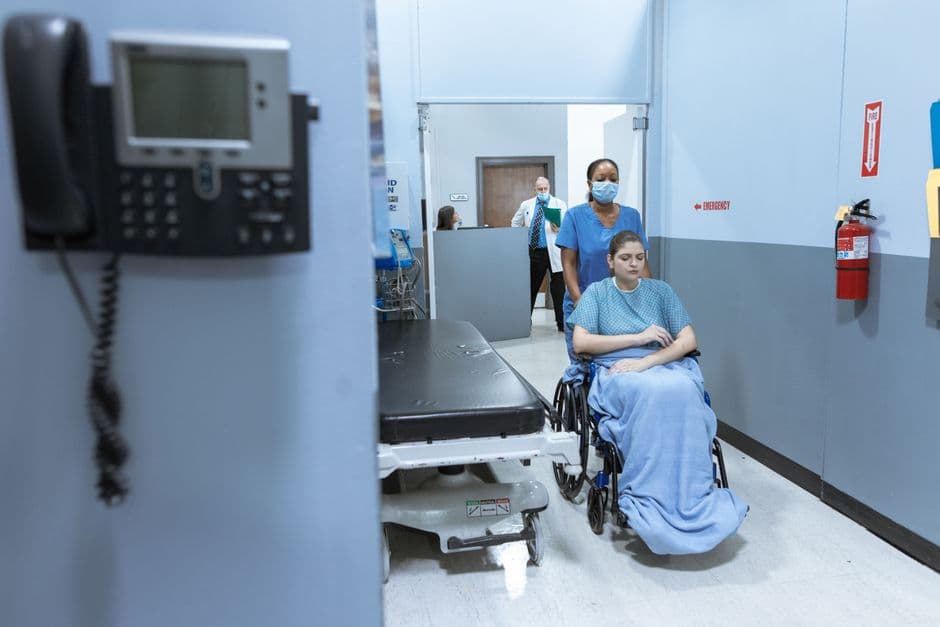
A hospital can have enough beds, enough staff, and enough equipment and still feel permanently overwhelmed — because the problem is not capacity, it is flow. Patients pile up at one step while another sits idle; admissions wait because discharges are slow; the emergency department jams because the wards are gridlocked upstream. AI patient flow management treats the hospital as the connected system it actually is, finding and clearing the bottlenecks that quietly shrink its usable capacity.
Flow Is the Hidden Constraint
Most hospital congestion is not a shortage of beds; it is patients stuck in the wrong place because the step ahead of them is blocked. A patient ready for a ward waits in the ED because the bed is occupied by someone ready for discharge who is waiting on paperwork or a pending result. One blockage cascades backward through the whole hospital. The beds exist; the flow does not.
This is why simply adding capacity often fails to fix congestion — the new capacity gets absorbed by the same broken flow. Managing the flow is what actually helps.
What AI Flow Management Does
The power of AI here is that it sees the whole journey at once, which no individual department can:
End-to-end visibility. It tracks patients across every step — registration, OPD, admission, ward, procedures, discharge — so the whole flow is visible in one picture rather than as disconnected department views.
Bottleneck prediction. It learns where and when jams form and predicts them before they happen — flagging that discharges are lagging admissions, or that a step is about to back up — so they can be prevented rather than firefought.
Delay flagging. It surfaces the specific blockages in real time: a pending discharge holding a bed, a result awaited, a step not started, so staff can act on the actual cause.
Coordination. By making the whole flow and its blockages visible, it helps the teams coordinate the actions that clear them — discharge planning, bed turnaround, and pacing admissions.
Discharge: The Master Valve
If there is one lever in patient flow, it is discharge. Slow discharges hold beds that admissions need, and the jam propagates backward to the ED and beyond. AI flow management pays special attention here — predicting which patients will be ready to discharge and when, flagging the tasks holding a discharge up, and prompting the coordination to complete them. Speeding up discharge, safely, unclogs the whole hospital more than almost any other single action.
From Firefighting to Foresight
The real shift AI brings is from reactive to proactive. Traditionally, flow is managed by whoever is shouting loudest about the current jam — pure firefighting. AI flow management predicts the jam before it forms, so the hospital acts early: arranging the discharge, freeing the bed, pacing the admission before the gridlock happens. Managing tomorrow's bottleneck today is far cheaper and calmer than fighting today's.
It Requires One Connected System
Flow is, by definition, cross-departmental, so it cannot be managed from siloed systems. It needs live, connected data across the entire patient journey — registration, clinical orders, bed status, and discharge — in one hospital management system. If each department keeps its own data and the ED cannot see ward bed status or pending discharges, no one can manage the flow because no one can see it. A healthcare analytics platform then turns flow data into the operational view leadership uses to keep improving it.
The Bottom Line
Most hospital congestion is a flow problem, not a capacity problem — patients stuck because the step ahead is blocked, cascading backward through the hospital. AI patient flow management sees the whole journey, predicts bottlenecks before they form, flags the real blockages (discharge above all), and helps clear them proactively. Done on one connected system, it effectively expands a hospital's usable capacity without adding a single bed — shorter waits, smoother days, and better care.
To see patient flow managed across one connected hospital system, explore the GoMeds hospital management system or request a demo.
Frequently Asked Questions
Related software
Ready to transform your healthcare business?
See how GoMeds AI can automate your operations, reduce costs, and improve patient outcomes with a personalized demo.
Tags
Written by Dr. Sanjay Kulkarni
Published on 4 April 2026