India's healthcare access problem is at its sharpest in rural areas — where specialists are few, distances are long, and a frontline health worker often carries responsibility far beyond their training and support. AI is frequently pitched as the answer to this, and the potential is genuine. But it comes wrapped in a temptation that must be resisted: the idea that AI can replace the missing doctors. It cannot, and pretending it can would fail rural patients. What AI can do — extend scarce expertise to where it is absent — is powerful enough without the fantasy.
The Real Opportunity: Extending Expertise
The rural healthcare gap is fundamentally a gap in expertise reaching people. AI's most valuable contribution is closing distance between scarce specialists and distant patients:
Screening. AI reviewing chest X-rays for TB or retinal images for diabetic retinopathy lets screening happen in rural settings without a specialist physically present, flagging the cases that need referral. In areas with almost no specialists, this is transformative — it finds the people who need care.
Triage. AI-assisted triage helps a frontline worker judge who needs urgent referral versus who can be managed locally, bringing a measure of specialist-level prioritisation to a setting that lacks it.
Decision support. For a non-specialist health worker facing a case beyond their training, AI decision support — ideally combined with teleconsultation to a real specialist — provides backup that makes safer care possible.
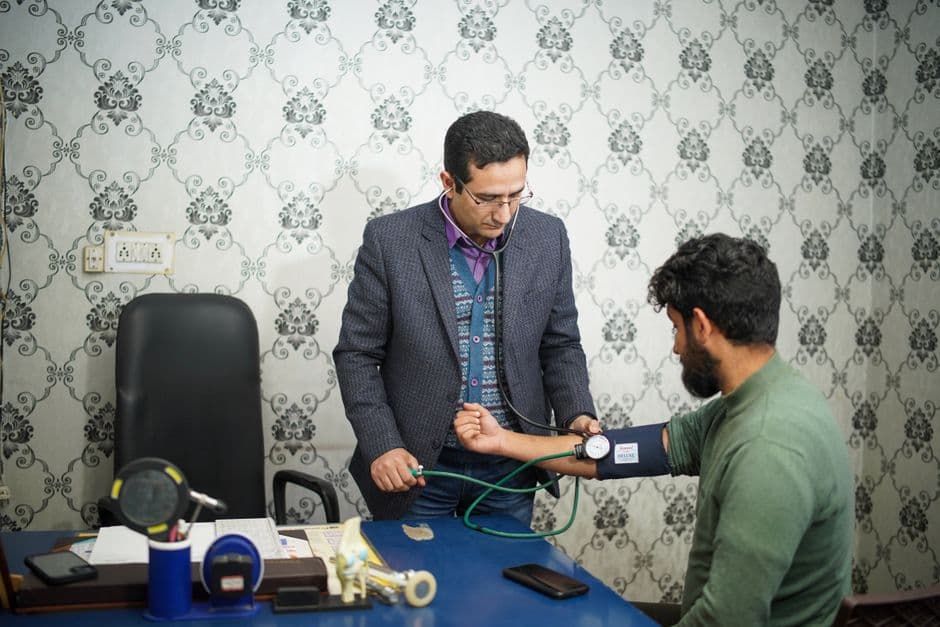
In each of these, AI is a tool in the hands of a human health worker, extending what they can safely do. That framing is not a caveat; it is the whole design.
Why "Replace" Is the Wrong Frame
It is tempting, faced with villages that have no doctor, to imagine AI simply filling the void. But healthcare is not only diagnosis — it is examination, judgement, communication, trust, and responsibility, none of which software provides. An AI standing in for a doctor in a rural clinic, unsupervised, would make confident errors on exactly the populations least able to absorb them. The goal is not AI instead of human care; it is AI that lets limited human care reach much further.
The Constraints That Must Shape the Design
AI for rural India cannot assume urban conditions. It has to be built for reality:
- Connectivity — intermittent or low bandwidth; tools must work in these conditions, not just on fast urban networks
- Devices and power — solutions must fit the hardware and electricity actually available
- Language and literacy — interfaces and outputs must work for the languages and digital literacy of rural users
- Validation on rural populations — a model validated on urban patients may perform poorly rurally; relevance is a safety issue, not a nicety
AI that ignores these constraints is an urban product that will not survive contact with a village clinic.
Making It Work on the Ground
The practical path pairs AI with the human infrastructure that already exists: frontline health workers, and teleconnection to real specialists. AI screens and triages; the health worker acts and, for anything beyond their scope, connects to a specialist by telemedicine. Lightweight clinic software that works in low-connectivity settings, capturing the record and enabling referral, ties it together. The AI extends the reach of both the local worker and the distant specialist — which is exactly the leverage rural healthcare needs.
The Bottom Line
AI's promise for rural India is real and important — but it is the promise of extension, not replacement. Screening that finds the patients who need care, triage that prioritises the urgent, and decision support that backs up frontline workers can push scarce expertise far beyond where specialists physically reach. Designed for rural constraints and kept firmly in human hands, AI could be one of the most consequential tools for healthcare access in the country. Sold as a substitute for doctors, it would betray the patients it claims to serve.
To explore lightweight, connected clinic tools suited to extending care, see GoMeds clinic management software or request a demo.
Frequently Asked Questions
Related software
Ready to transform your healthcare business?
See how GoMeds AI can automate your operations, reduce costs, and improve patient outcomes with a personalized demo.
Tags
Written by Dr. Sunil Patil
Published on 6 July 2026